
Check planned areas
Scheduled or randomized patrols provide repeatable views of selected outdoor areas. Timing and routes are established for the site.
Your cameras watch the building. What is happening across the rest of your property?
Drone security adds an aerial view of outdoor areas that can be difficult to check from the ground. For a manufacturing facility, business campus, or large yard, it can help your security team investigate activity beyond the core building and decide what to do next.
MSC Integration works with Sunflower Labs and the flight operations and monitoring teams to bring this technology to suitable facilities, with installation and service coordinated around your property.
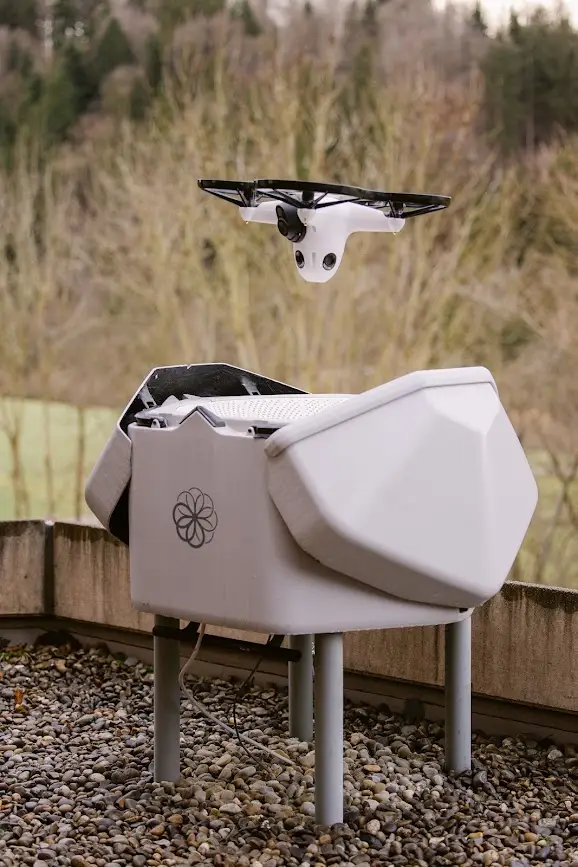
It combines a camera-equipped drone, a docking and charging station, and software for planned flights and live video. Instead of having someone carry a drone outside for each patrol, the system operates from a designated location on the property.
With Sunflower Labs' Beehive system, the Bee drone flies from the Hive, follows a configured mission, and returns to land and recharge. A pilot remains responsible for flight operations; automation does not remove human oversight.
Scheduled or randomized patrols provide repeatable views of selected outdoor areas. Timing and routes are established for the site.
An operator can request a flight, or a compatible camera or sensor event can trigger one, depending on the approved setup.
Live video helps the monitoring team or on-site personnel understand activity and follow your response procedures.
System operation: Sunflower Labs product overview and FAQ.
Consider a facility with cameras at entrances, loading docks, and important equipment, but substantial acreage around the main building. An alert near a remote fence line can leave the team asking: Is someone there? Where are they moving? Does anyone need to respond?
An aerial view can help answer those questions without relying solely on the view from a distant fixed camera or sending a person out to look first. This is a planning example, not a guarantee that every area will be visible or every incident detected.
Review activity around outdoor equipment, storage areas, service roads, and the land surrounding production buildings.
Help assess after-hours activity across campuses, parking areas, and spaces between buildings.
Add another viewing angle where fencing, distance, or changing site conditions make ground-level checks difficult.
Early detection matters, but someone still needs to assess the event and respond. A drone can provide another view; it does not physically secure a gate, intervene on the ground, or guarantee that an incident will be prevented.
We look at how aerial observation can work alongside your security cameras, intrusion alarms, and existing security personnel. Compatibility and the response workflow are reviewed for each project.
If you already have guards, drone video can help them assess an area and decide where attention is needed. If a monitoring center is involved, your procedures determine when to notify management, request private security, or contact law enforcement.
MSC Integration is your point of contact for the deployment and handles installation of the unit. We coordinate with Sunflower Labs, flight operations personnel, and the monitoring team so that the system and its procedures fit your facility.
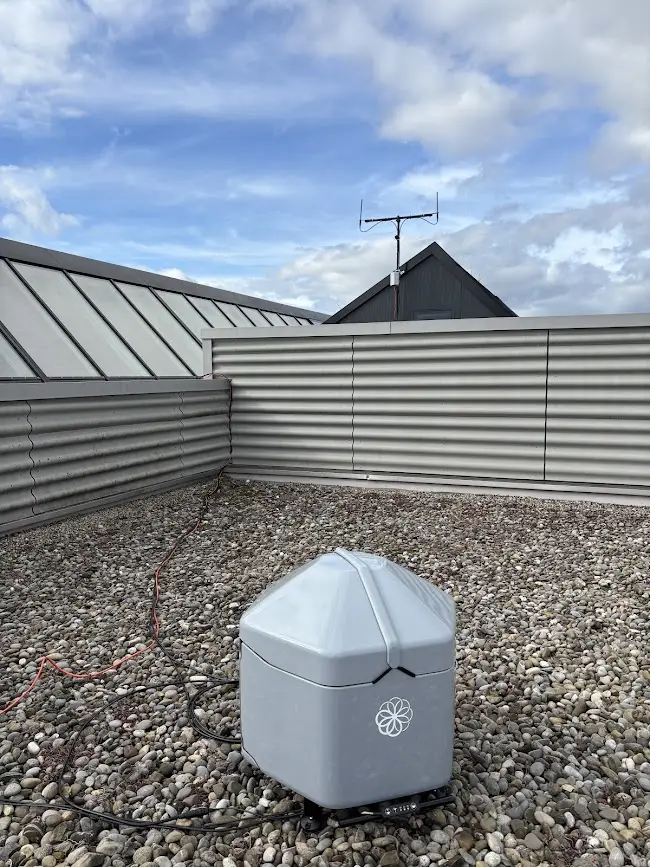
Sunflower Labs publishes equipment limits, including a nominal 600-meter transmission radius and 15 minutes of operational flight time plus a safety reserve. These are planning references, not a promise of usable coverage or patrol duration at your facility. Actual suitability depends on the site and proposed operation.
Review the manufacturer's technical specifications. The proposed configuration and current requirements are confirmed during assessment.
That depends on the security plan. We begin by looking at the gaps you want to address and the equipment and personnel already in place. Aerial patrols may change how some checks are performed, while fixed cameras and people continue to serve other important roles.
No. Flights alternate with time at the dock for charging and readiness. Patrol cadence must account for the route, flight conditions, battery reserve, and recharge time.
Sunflower offers low-light imaging, with optional thermal imaging for suitable configurations. We review lighting, the intended task, and the selected equipment rather than assuming every night-time scene will be equally clear.
A remote piloting arrangement may be available as part of the deployment. The flight operations team establishes pilot responsibilities and the operating requirements for your site. Autonomous flight still requires appropriate oversight.
Sunflower Labs holds an FAA waiver covering specified operations, including flights beyond visual line of sight, subject to its conditions. That is not blanket permission for any property or operator. The responsible flight operations team must confirm how the proposed deployment meets the applicable requirements.
Read Sunflower Labs' FAA Certificate of Waiver 107W-2026-00940.
It depends on the property, equipment placement, installation needs, integrations, and the piloting and monitoring arrangement. We start with the site and your objectives so the proposal reflects what the project actually requires.
Yes, a trailer-based solution is a separate option to discuss with our team at Mr. Security Camera Trailers. This page focuses on a system installed for an existing facility. Trailer-based flight operations take place from an appropriately deployed, stationary unit.
Tell us what you want to observe, where your current coverage falls short, and how your team responds today. MSC Integration will help coordinate an assessment of whether drone security is a practical fit.
Looking for a broader introduction? Explore the technology showcase at Mr. Security Camera.